

Materials costs are up, freight costs are up, and retailer chargebacks and promotional requirements keep stacking up. For many beauty brands, tightening back-end operations is now one of the most direct ways to protect profitability.
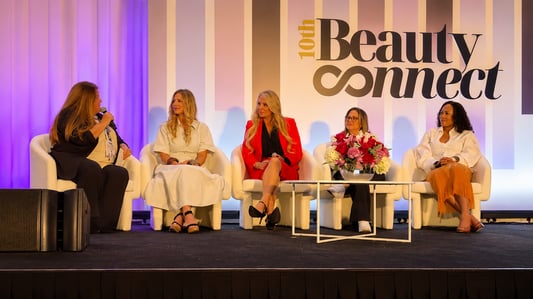
During a margins-focused panel at Beauty Connect LA 2026, moderator Nadine Tapia of Latinas in Beauty put a direct question to operators from QuickBox Fulfillment, Borghese, Topicals, and MaryRuth's:
How can beauty brands protect their margins in today's market?
Their answers kept returning to beauty fulfillment, inventory, and supply chain decisions that rarely make headlines but quietly determine profitability.
How to Reduce Retail Chargebacks Before They Erode Margins
Dawn Hilarczyk, COO of Borghese, said chargeback protection starts with the retailer contract: "knowing the contract is first and foremost and how you can negotiate it." The bigger risk is timing. "Sometimes the chargebacks come late," she said. "They don't come every month. They don't come every quarter."
Her advice: for the first couple of years with a retailer, have someone review every chargeback line by line and challenge it with the retailer.
Panelists explained that chargebacks are negotiable, given that they function as a profit center for some retailers. Irene Scharmack, CEO of QuickBox Fulfillment, explained that most chargebacks stem from on-time-in-full (OTIF) performance or from how an order was shipped, down to label placement.
Work with a 3PL that builds retailer requirements into its processes and has the quality control to back up a dispute. QuickBox, for example, photographs retail orders so that if a chargeback comes in, it can provide "objective evidence that things were done correctly": proof that orders were packed, labeled, and shipped according to the retailer's routing guide.
Takeaway: Treat compliance documentation as a margin tool, not just paperwork.
Know Your True Fulfillment Cost by Channel
A blended P&L can hide where margin disappears. Sochima Mbadugha, President of Topicals, described building contribution margin models by channel across Sephora, Amazon, and DTC. Wholesale orders carried lower pick-and-pack fees, while a more premium DTC customer experience and TikTok Shop gifting added up. The analysis showed "fulfillment was where we were getting dinged a lot on D2C and TikTok Shop."
Who handles fulfillment shapes those costs in every channel. For high-volume brands shipping in-house, Scharmack explained how moving to a 3PL pays off because brands share lease and management costs and "leverage the volume that they [the 3PL] have and the discounts that they have with their carriers."
The same logic applies to omnichannel expansion. Scharmack described a brand that launched into 78 retailers and later found only about five were profitable, because the rest required custom kits, boxes, or SKUs that the brand had not originally planned for. Another brand launched with Target, spent a year learning retail, then added CVS and Walmart.
Takeaway: Price every channel and retailer requirement before you commit to it.
Beauty Inventory Management: Plan for the Forecast to Be Wrong
"Inventory is often one of the largest uses of cash for a beauty brand," Tapia noted. Connie Hunter of MaryRuth's acknowledged that forecasting is always a challenge, so her team watches what's trending, moves quickly, and stays flexible. The goal isn't a perfect forecast; it's limiting the cost of being wrong.
After a new-format launch left excess stock in the warehouse, Topicals now forecasts new products conservatively. "We'd rather be in the position of it selling out and that being pent-up demand versus sitting on a bunch of product," Mbadugha said.
Hilarczyk said minimum order quantity (MOQ) decisions depend on where product is going. As a global brand facing expiry risk, Borghese accepts slightly higher COGS for smaller batches. "I'd rather run through the inventory, look at it in six months, and repurpose another PO at a smaller MOQ," she said.
Building Beauty Supply Chain Resilience Across Nodes
More warehouses don't automatically mean better economics. Scharmack illustrated how brands shipping 200 to 500 orders a day usually don't need multiple nodes. One Denver-based brand that added Atlanta was "spending about a million dollars on an annualized basis split shipping" orders, and moved back to a single node.
Alternatives to a multi-node operation include nightly line hauls that create a synthetic multi-node network, or targeted expedited shipping. For one single-node brand shipping 15,000 orders a day, expediting to hard-to-reach zones is "actually cheaper than them replicating inventory in multiple nodes," an approach she said works best for lightweight product.
Where to Start
Margin erosion in beauty rarely comes from one decision. It accumulates through unreviewed chargebacks, retailer requirements nobody priced, inventory bought ahead of demand, and networks built for scale that hasn't arrived. Start by making those costs visible by channel, retailer, SKU, and shipping lane. Then build options before you need them: a second manufacturer, multiple carriers, and fulfillment that can flex as your channel mix shifts.
How QuickBox Fulfillment Supports Beauty Brands
QuickBox Fulfillment helps beauty brands make these decisions with confidence, from retail compliance records that hold up in a chargeback dispute to carrier mix and network planning based on actual order volume. If you're preparing for a retail launch, weighing a move to a 3PL, or wondering whether your current setup still fits your channel mix, talk to the QuickBox team about a fulfillment review.
