

How Subscription Box Fulfillment Helps Brands Keep Churn Low
Most subscription brands watch churn through product, price, and marketing. Those levers matter, but they overlook what the subscriber experiences every month: the box itself, and everything it takes to get that box there accurately and on time. A box that arrives late, shows up damaged, or contains the wrong items hands a wavering subscriber a concrete reason to cancel.
Subscription box fulfillment will not decide retention on its own. It is one of the churn drivers a brand can influence every billing cycle, and the effect compounds: repeated late or inaccurate boxes give subscribers a pattern to cancel over.
Key Takeaways
- Subscribers re-decide every billing cycle, so each box works like a small renewal vote.
- Late, inaccurate, damaged, and substituted boxes are the most common fulfillment reasons to cancel.
- Repetition does the damage: the same problem across several cycles creates the pattern subscribers cancel over.
- Fulfillment is controllable on every cycle, which is what separates it from product and pricing work.
- Late or unpredictable shipments break the rhythm subscribers build their expectations around. Part of the appeal is knowing roughly when the box arrives, and inconsistent timing erodes that.
- Inaccurate orders hit curated boxes hardest. A wrong item, a missing sample, or the wrong variant means the subscriber did not receive what they were promised.
- Damaged products turn anticipation into disappointment, usually because the packaging did not protect the contents.
- Inconsistent packaging quality chips away at the premium feel subscribers are paying for, especially when one month looks considered and the next looks rushed.
- Inventory gaps force substitutions the subscriber did not choose, which can read as a downgrade even when the replacement is reasonable.
- A slow returns or replacement process signals that a problem will not be made right quickly.
- Accuracy: the right items, correctly assembled, in every box.
- Predictable delivery: subscribers can anticipate when the box lands.
- Uniform presentation: the tenth box feels as intentional as the first.
How Fulfillment Shapes Subscriber Retention (and What it Cannot Fix)
Recurring revenue changes the math of a purchase. A subscriber makes the same buying decision again every billing cycle, and each box works like a small renewal vote. When a box arrives complete, undamaged, and on schedule, it quietly confirms the choice to stay. When it does not, it adds a reason to reconsider.
Fulfillment is not the only driver of churn. Product quality, pricing, perceived value, how fresh the curation feels, and the quality of customer service all shape whether someone keeps a subscription. A brand can execute fulfillment flawlessly and still lose subscribers to a weak product or a price increase. What fulfillment offers is control. A brand can measure it, staff it, and improve it on a known schedule.
Repetition is what makes it matter. A single late box is forgivable, but the same delay three months running becomes a pattern, and patterns are what subscribers cancel over. Better fulfillment will not rescue a product people have stopped wanting, but poor fulfillment can steadily undermine a product they still like.
Post-purchase experiences can have a direct impact on customer loyalty. Narvar's 2025 State of Post-Purchase Report found that 60% of U.S. shoppers ages 18 to 29 would not shop with a retailer again after just one bad delivery experience.
Common Fulfillment Problems That Push Subscribers to Cancel
Most fulfillment-driven cancellations trace back to a handful of recurring problems.
Any one of these is recoverable in isolation. The risk is repetition: across enough billing cycles, small failures accumulate into a clear reason to leave.
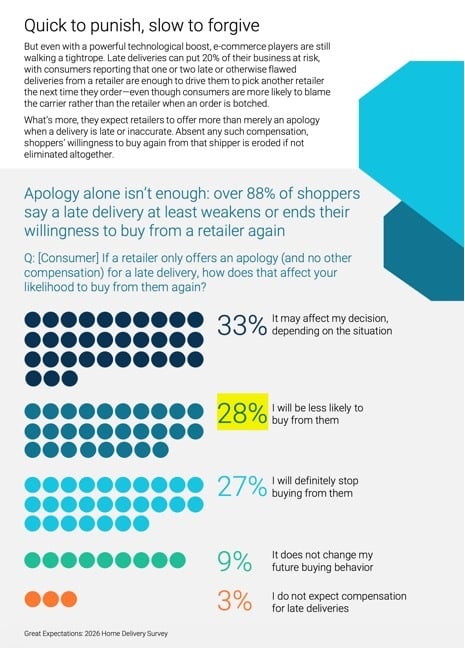
Delivery failures can quickly turn into lost customers. AlixPartners' Great Expectations: 2026 Home Delivery Survey found that more than 85% of U.S. consumers say a poor delivery experience reduces their willingness to purchase from that retailer again.
Why Consistency is the Core of Recurring Fulfillment
Subscription fulfillment is judged repeatability across many deliveries, and that shapes what good fulfillment looks like. A subscriber remembers the box that arrived late far more than the nine that arrived on time, which makes variance the thing that defines the experience.
Consistency shows up in three concrete ways.
Together these lower the perceived risk of staying subscribed, because the subscriber stops bracing for the month something goes wrong.
Reliability at that level comes from standardized processes, documented procedures, and quality control designed into the daily workflow.
How QuickBox Supports This
QuickBox helps brands maintain reliable order accuracy through disciplined processes and quality checks. That level of cycle-over-cycle consistency is what recurring subscription boxes depend on to keep subscribers confident in what shows up each month.
Kitting, Packaging, and the Unboxing Experience
For many subscription brands, the box is the product experience. Contents, assembly, and presentation are the offer itself, which puts real retention weight on the parts of fulfillment that often get treated as operational detail.
Subscription Kitting and Box Assembly
Kitting is the process of assembling multiple products, samples, and inserts into a single finished box built to a defined specification. For a subscription brand, accurate kitting is what makes each box match what the subscriber signed up for. It sounds straightforward until the contents change every cycle. Rotating and curated boxes raise the bar considerably, because each new configuration is a fresh opportunity for a pick error, a missing item, or a wrong count.
QuickBox supports value-added fulfillment services such as kitting and custom assembly, helping brands manage subscription and curated-box fulfillment as part of their broader fulfillment strategy.
Branded and Custom Packaging
Custom and branded packaging carries the perceived value subscribers are paying for, and keeping it consistent across cycles protects the brand experience over time. Presentation and protection are also the same investment. A box designed to hold its contents securely can reduce damage-related cancellations while it reinforces the brand, so the spend does double duty.
Inserts, Samples, Promotional Materials, and Personalization
Inserts, sample products, promotional cards, and personalized touches are among the least expensive retention levers a subscription brand has, provided they are executed reliably. The challenge is accuracy at the item level: the right insert or sample in the right box, which gets harder when offers are segmented by subscriber tier, tenure, or cycle. Personalization that looks effortless to the subscriber depends on fulfillment systems that can handle variable box contents without slowing the operation down.
Inventory Planning and Avoiding Subscription Stockouts
Subscription demand tends to be more predictable than one-time retail, which is an advantage worth using. The subscriber base is known, and expected volume can be estimated with more confidence than a typical launch. A stockout on a curated item forces a substitution or a late box, and subscribers notice immediately because they were expecting a specific item.
Good inventory planning starts with forecasting against the actual subscriber base and its trajectory, accounting for new signups, pauses, skips, and cancellations rather than a flat growth assumption. Hero SKUs and limited-run items need safety stock sized to their supplier lead times, since those are the products most likely to cause a visible miss. Real-time inventory visibility ties it together, giving the brand and its fulfillment partner enough warning to catch a shortfall before it reaches a batch ship date.
An avoidable stockout in a recurring box is a self-inflicted churn risk, and most are preventable with disciplined planning and real-time inventory visibility.
Stockouts can quickly put customer loyalty at risk. McKinsey research found that among U.S. consumers who were unable to purchase an item because of availability, 39% switched brands and 32% went to another retailer, while only 13% waited for the item to come back in stock.
Managing Subscription Spikes and Shipping Cutoffs
Subscription volume is bursty by design. Orders cluster around billing dates and cutoff windows, so the operation faces concentrated surges rather than a steady flow. A setup that runs comfortably on an average day can still buckle during the monthly peak, and when it buckles, the result reaches subscribers as late boxes.
Cutoff discipline is the first line of defense. Honoring the promised cutoff for each shipment is what keeps boxes on the schedule subscribers expect. Meeting it under a surge takes deliberate batch processing and labor planning, moving large volumes through a compressed window without letting accuracy slip. The operations that handle this well plan capacity for the peak rather than the average, because the peak is where the subscriber experience is actually decided.
QuickBox works with brands to support fulfillment workflows around recurring order cycles, helping coordinate inventory and order processing as demand fluctuates.
Returns, Replacements, and Customer Recovery
A return is a cost to absorb, and it is also the moment that often decides whether a subscriber with a problem stays or leaves. When a box arrives damaged or wrong, the speed and ease of making it right tells the subscriber how much the brand values them.
Fast, low-friction replacements matter most here. A quick reship on a damaged or incorrect box can turn a bad experience into a reason to trust the brand more, while a slow or confusing resolution simply confirms the decision to cancel. Clear returns and exchange policies help wherever the subscription model allows them. Recovery depends on knowing exactly what shipped, being able to reship quickly, and keeping customer service and the fulfillment operation working from the same view of the order.
Handled well, a fulfillment mistake can strengthen the relationship it threatened.
Returns can have a lasting impact on customer loyalty. According to the National Retail Federation and Happy Returns' 2025 Retail Returns Landscape, 71% of consumers say they are less likely to shop with a retailer again after a poor returns experience.
Choosing a Fulfillment Partner That Can Scale With You
For a growing subscription brand, the real question is whether the current setup can keep delivering as volume climbs. This is where many brands start evaluating a partner, or replacing one that has stopped keeping up. Our guide to the questions worth asking a 3PL provider covers what to test before you move.
Scalability is the first thing to test. An operation that performs well at a few thousand boxes a month should hold the same accuracy and speed as monthly volume multiplies, without a visible drop in quality. Subscription-specific capability matters just as much. Proven kitting, curated-box assembly, insert handling, and custom packaging are different work from generic pick-and-pack, and the difference shows up in the finished box.
Technology matters as much. Integrations with the brand's subscription and ecommerce platforms, real-time inventory and order data, and shared reporting keep the brand from operating blind between its own systems and its 3PL. Consistency and quality control should be documented and measurable, backed by a track record with recurring cycles, cutoffs, and the predictable spikes that define subscription work.
Work With QuickBox
QuickBox supports subscription brands with kitting, custom packaging, and operations built for recurring order cycles. That work is backed by more than 36 million shipments a year across its network, FDA-registered facilities serving supplement and beauty brands, and LogicPod, our WMS and OMS platform for real-time inventory and order visibility.
Tell us your box configuration, monthly cycle volume, and cutoff dates, and we will walk you through how QuickBox would run the program. Request a subscription fulfillment quote.
What This Means For Your Subscription Program
Fulfillment will not fix a weak product or an overpriced plan. It is still something a subscription brand can control on every cycle, and reliable execution protects retention while the rest of the business works on product, pricing, and curation. Consistent kitting, predictable shipping, accurate inventory, and fast recovery when something goes wrong all remove reasons a subscriber might have to cancel. If your fulfillment is adding friction, fix it before it shows up in your cancellation numbers.
Frequently Asked Questions
How does fulfillment affect subscription box churn?
Fulfillment affects churn through the reliability of the subscriber experience. Late shipments, damaged or inaccurate boxes, stockouts, and poor returns handling each give a subscriber a reason to cancel. Because subscribers judge the brand every cycle, small recurring problems compound, so consistent and accurate fulfillment helps protect retention.
What fulfillment problems most commonly cause subscribers to cancel?
The most common are late or unpredictable delivery, wrong or missing items, damaged products, inconsistent packaging quality, avoidable stockouts and substitutions, and slow or confusing replacement processes. Any one is recoverable once, but repeated across billing cycles they add up to a reason to leave.
What is subscription box kitting?
Kitting is the process of assembling multiple products, samples, and inserts into a single finished box built to a defined specification. For subscription brands it is what makes each curated box match what the subscriber was promised, and accurate kitting is central to a consistent subscriber experience.
Should a growing subscription brand use a 3PL for fulfillment?
A 3PL can help when in-house fulfillment starts limiting accuracy, consistency, or the ability to handle recurring spikes and cutoffs. Brands typically evaluate a 3PL when subscriber volume outpaces their current capacity or when quality slips during monthly surges. The right partner should offer proven kitting, custom packaging, real-time visibility, and the scalability to grow without losing accuracy.
Can better fulfillment alone reduce churn?
No. Product quality, pricing, perceived value, and customer service all influence retention, and fulfillment cannot compensate for weakness in those areas. Fulfillment is one of the few churn factors a brand fully controls each cycle, so improving it removes controllable friction while the brand addresses the other drivers separately.
